How Long Does a Home Renovation Take in Washington DC? Realistic Timelines for 2026

DC Home Renovation Timeline

SUMMARY

A full home renovation in Washington DC takes between four and eighteen months, measured from initial consultation to certificate of occupancy. Single-room projects like bathrooms or kitchens run 10 to 28 weeks. Whole-home renovations take 9 to 18 months. The variance comes from project scope, permit complexity, historic district review, and material lead times.

Key Points

  • Bathroom remodel: 10 to 16 weeks total (design + construction)
  • Kitchen renovation: 16 to 28 weeks total
  • Whole-home gut renovation: 9 to 18 months
  • DCRA permit review: 4 to 12 weeks for residential work
  • Historic district HPRB review adds 6 to 12 weeks
  • Begin discovery 8 to 18 months before target completion
Four months on the short end. Eighteen months on the long end. That is the realistic range for a full home renovation in Washington DC, measured from initial consultation to certificate of occupancy.
Why such a spread? A modest bathroom remodel might conclude in six weeks. A historic Georgetown rowhouse requiring structural work, a reconfigured kitchen, and a finished basement easily approaches a year. Most variables that decide where your project lands are knowable in advance.

What follows is a breakdown by project type, the five phases every DC renovation moves through, and the specific factors that compress or extend a schedule in the District. Written for homeowners who want a clear picture before committing, and for those already in design who need to anchor expectations against reality.

Renovation timelines by project type

In Washington DC, single-room renovations take 6 to 12 weeks of active construction. Multi-room or full-floor projects take 4 to 8 months. Whole-home renovations and additions take 9 to 18 months. These ranges assume design is largely complete before construction begins, and they reflect 2026 conditions including current permit processing times and material lead times.

Project Type Design Phase Construction Total Timeline
Powder room or half-bath 3 to 4 weeks 3 to 5 weeks 6 to 10 weeks total
Full bathroom remodel 4 to 6 weeks 5 to 8 weeks 10 to 16 weeks total
Master suite renovation 6 to 8 weeks 8 to 12 weeks 16 to 22 weeks total
Kitchen renovation 6 to 10 weeks 8 to 14 weeks 16 to 28 weeks total
Basement finish-out 4 to 8 weeks 10 to 16 weeks 16 to 26 weeks total
Whole-floor renovation 8 to 12 weeks 16 to 28 weeks 28 to 44 weeks total
Whole-home gut renovation 12 to 18 weeks 28 to 52 weeks 40 to 80 weeks (9 to 18 months)
Second-story addition 16 to 24 weeks 32 to 48 weeks 48 to 72 weeks (12 to 18 months)
Historic rowhouse restoration 12 to 20 weeks 24 to 48 weeks 36 to 68 weeks (varies with HPRB review)

The ranges above reflect projects where homeowners work with a design-integrated firm. Renovations split across separate architects, designers, and general contractors run 20 to 40 percent longer. Why? Coordination friction. Every phase boundary becomes a handoff. Every handoff becomes a delay. For more on integrated design and construction, see our overview of our renovation services and the residential design process.

The 5 phases of a DC home renovation
home renovation

Every renovation in the District, from a powder room refresh to a whole-home overhaul, moves through five sequential phases. Each has a typical duration, a defined deliverable, and a predictable failure mode when rushed.

Phase 1: Discovery and Consultation (1 to 3 weeks)

The opening phase establishes scope, budget parameters, and aesthetic direction. Plan on 2 to 4 meetings: initial site visit, follow-up to review existing conditions, a budget conversation, and a design brief sign-off. This phase compresses when homeowners arrive with a clear brief. It stretches when scope is still being explored.

Phase 2: Schematic Design and Design Development (4 to 12 weeks)

Floor plans, elevations, material palettes, and 3D visualizations get developed and refined here. Structural engineers and MEP engineers (mechanical, electrical, plumbing) join the team for projects that need them. By the end of Phase 2, you should have a complete set of design intent drawings showing what the project will look like, room by room, surface by surface.

Phase 3: Construction Documents and Permitting (6 to 14 weeks)

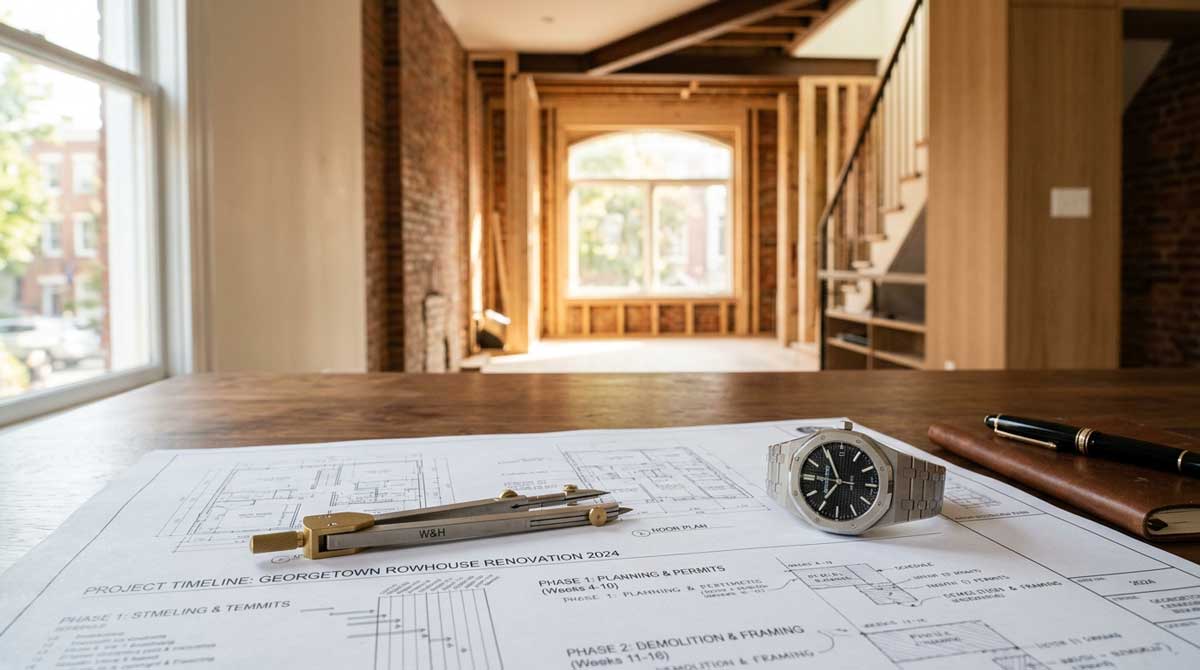
Construction documents (CDs) translate design intent into the technical drawings contractors build from. In parallel, permit applications go to DCRA. As of early 2026, DC permit review runs 4 to 12 weeks for most residential work. Structural changes and historic district properties hit the longer end. Projects in Georgetown, Capitol Hill, Kalorama, and other historic districts add 4 to 8 weeks for Historic Preservation Review Board (HPRB) approval on top of standard DCRA timing.

Phase 4: Construction (varies by project, see table above)

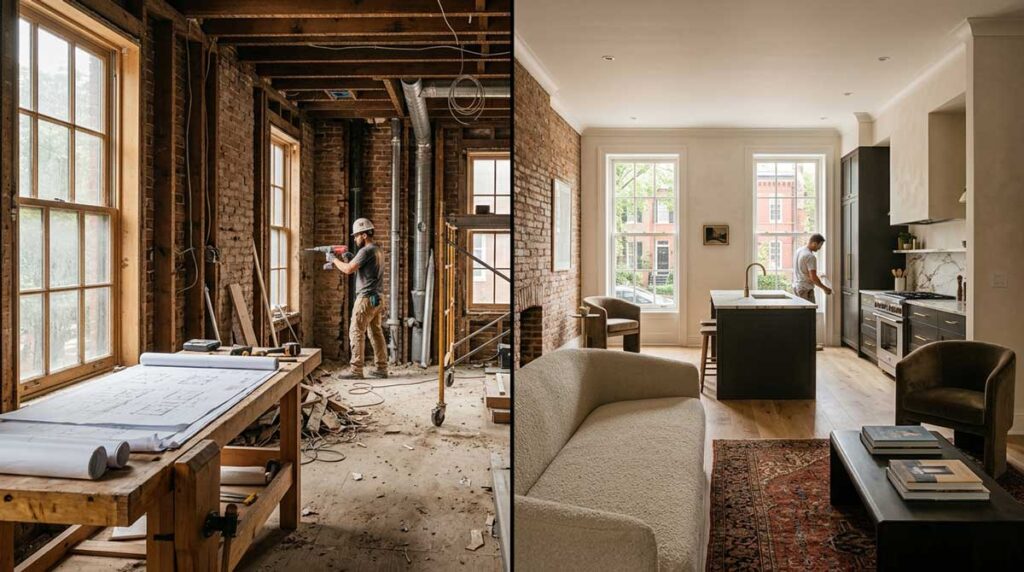
Demolition first. Then framing. Then mechanical rough-in, drywall, finishes, millwork, and final installation, each in sequence with predictable interdependencies. Construction is the longest phase. It is also the most predictable phase when scope is locked at the end of Phase 3. Mid-project slippage almost always traces to change orders, which are modifications introduced after construction documents were finalized.

Phase 5: Punch List and Closeout (2 to 4 weeks)

Walk-through. Punch list of remaining items. Finish corrections. Certificate of occupancy where required. Handover. Closeout takes longer than most homeowners expect, because the items on a punch list are the small details that determine whether the project feels complete.

What causes DC renovations to take longer than expected
DC renovations
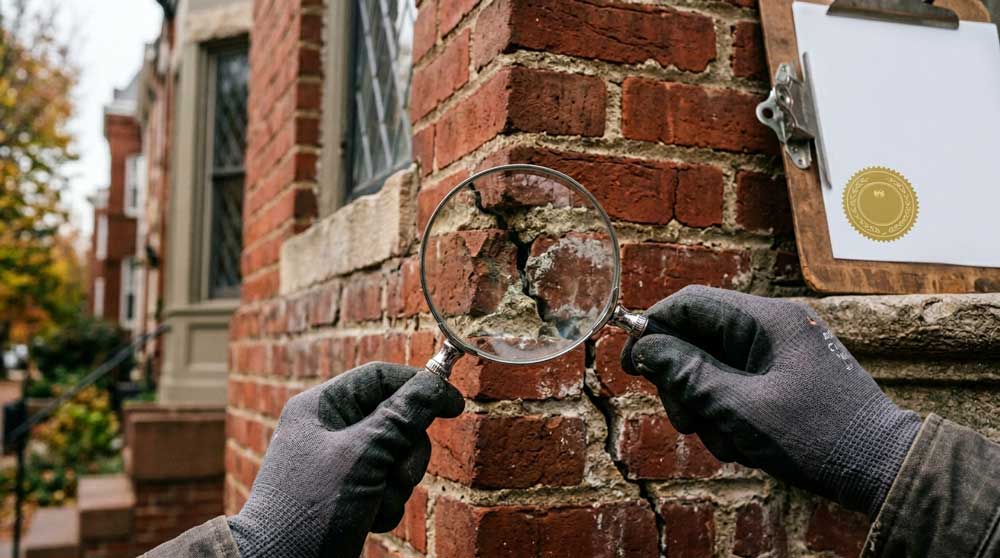
Four root causes account for most DC renovation delays. Knowing them in advance is the closest thing to preventing them.

Permit delays. DCRA processing times have varied widely over the past several years. Structural modifications, additions, and projects in historic districts always need longer review. Projects that anticipate this and front-load permit-ready drawings into Phase 3 rarely hit mid-project permitting surprises.

Material lead times. Custom millwork, imported stone, specialty windows, and certain plumbing fixtures can require 12 to 20 weeks. Order finishes during Phase 3, not when construction starts, and you avoid the most common cause of mid-construction stoppage.

Mid-construction change orders. Every change introduced after Phase 3 closes adds time. Sometimes days. Sometimes weeks. The most expensive change orders ripple into adjacent trades: a kitchen layout change that requires re-routing plumbing, which delays drywall, which delays paint, which delays finish installation.

Historic preservation requirements. Properties in Georgetown, Capitol Hill, Kalorama, LeDroit Park, Strivers’ Section, and DC’s other historic districts go through HPRB review on top of standard DCRA permitting. The review adds 6 to 12 weeks. It can also constrain design decisions in ways that send projects back for revisions if not anticipated early.

How to plan your life around a DC renovation timeline

If construction will affect a kitchen, bathroom, or whole-home space, plan in advance for the period that space is unavailable. Single-room renovations rarely require temporary relocation. Whole-home gut renovations almost always do. The construction window, not the total project timeline, is what affects how you live.
For bathroom-only renovations: plan on 4 to 6 weeks of fixture downtime; the rest of the home stays habitable. For kitchen renovations: 6 to 10 weeks without a working kitchen. Many DC homeowners set up a temporary kitchenette in a dining room or basement. For whole-home renovations: plan on an extended absence, typically 8 to 14 months of off-site living.

Calendar timing matters too. Permit volume at DCRA peaks in late spring and early fall. Submissions in January or July often clear faster. Material lead times stretch in November and December as holiday shutdowns ripple through supply chains. For projects in Bethesda, Chevy Chase, McLean, and other DMV areas we serve, county-specific permit cadences add another scheduling variable worth coordinating against.

Planning a renovation in Washington DC?

Arch & Handle is an integrated architecture and interior design firm serving Washington DC, Maryland, and Northern Virginia. We design and execute residential, commercial, and hospitality projects with timelines anchored in DC’s specific permitting, historic preservation, and material lead-time realities. To discuss your project and receive a realistic schedule estimate, begin a conversation.
Frequently Asked Questions

Can a DC kitchen renovation be done in under three months?
Realistically, no. Not a full renovation involving layout changes, new cabinetry, and finish work. A cosmetic refresh (paint, hardware, countertops, no layout change) wraps in 6 to 8 weeks. A true kitchen renovation meeting DC’s permitting requirements for plumbing and electrical changes takes 16 to 28 weeks from design through closeout.
As of early 2026, DCRA residential permit review averages 4 to 8 weeks for straightforward work and 8 to 14 weeks for structural changes or historic district properties. Same-day permits remain available for limited cosmetic work that does not involve structural, plumbing, or electrical changes. Projects in historic districts add HPRB review of 6 to 12 weeks on top of DCRA timing.
Three structural reasons. First, DC’s higher concentration of historic district properties requires additional review. Second, permit processing times in the District have historically run longer than suburban Maryland or Virginia counties. Third, the prevalence of attached rowhouses introduces party-wall and shared-structure considerations that suburban detached homes do not face.
For a kitchen, master suite, or single-floor project: begin discovery 8 to 10 months before your target completion. For whole-home work or additions: 14 to 18 months ahead. Historic district projects need an additional 2 to 3 months on top. These windows include design, permitting, and construction with buffer for typical material lead times.
Yes, meaningfully. Properties in Georgetown, Capitol Hill, Kalorama, LeDroit Park, Strivers’ Section, and other DC historic districts undergo Historic Preservation Review Board (HPRB) approval in addition to standard DCRA permitting. HPRB review typically adds 6 to 12 weeks and can require design revisions that further extend timelines. Plan an additional 2 to 4 months on top of comparable non-historic property timelines.
Construction is the longest phase in absolute weeks, ranging from 5 weeks for a powder room to 52+ weeks for a whole-home gut renovation. But the single longest stretch in calendar terms is often the combined Construction Documents and Permitting phase, which runs 6 to 14 weeks back-to-back for most projects. Front-loading permit-ready drawings during Phase 2 (design development) compresses this stretch significantly.

Sarah Mitchell

Senior Interior Designer, Arch & Handle

Sarah Mitchell has led residential interior projects for over 12 years, with a particular focus on Washington DC’s luxury residential market. She specialises in integrated design — where architectural decisions and interior specification happen in parallel rather than sequence. She has overseen kitchen design projects across Georgetown, McLean, Bethesda, and the Southwest Waterfront.

Search

Share This Article

Stay Informed

Quarterly updates on DC’s luxury design market, material intelligence, and our latest projects.

Continue Reading

More from Arch & Handle

dc architectural styles

Architecture

DC’s Architectural Heritage: A Designer’s Guide to Federal, Beaux-Arts, and Modernist Homes

Washington DC contains six distinct architectural traditions across its residential stock: Federal (1780 to 1820), Greek Revival and Italianate (1820 to 1880),

younus

May 21, 2026

renovate or move washington dc

Residential Design

Renovate or Move? A DC Homeowner’s Decision Framework

In Washington DC’s current housing market, the breakeven point for homeowners deciding whether to renovate or move Washington DC generally falls around 30 to 40 percent of the home’s current value in renovation cost.

younus

May 21, 2026

Ready to Design Your Perfect Kitchen?

Our studio works with Washington DC homeowners to create kitchens that integrate architecture, materials, and craft into spaces built for how you actually live.

Scroll to Top